
Anatomy of an Indonesian Sarong: Kepala, Badan, and Traditional Patterns Explained

Ask two suppliers for "the blue design with the red head" and you may receive two very different sarongs. In Indonesia, sarongs are described by their parts, and knowing those few words makes every order, quality check and product description clearer.
This guide explains the anatomy of an Indonesian sarong, the traditional patterns you will meet, and how to use both when you order.
The parts of a sarong
A sarong is a rectangle of cloth, often sewn into a tube, with a layout shared across many Indonesian batik and weaving traditions.
- Kepala (head): a panel that differs from the rest of the cloth in color or pattern. On classic batik sarongs it holds rows of triangular tumpal motifs and takes up about a third of the width. It can sit at one end, at both ends or in the middle of the cloth (British Museum).
- Badan (body): the main field of the cloth, carrying the repeating pattern.
- Papan: the vertical panels on either side of the kepala, which frame it.
- Borders: narrow bands along the top and bottom edges. On batik sarongs, the thinnest edge band is called sisir.
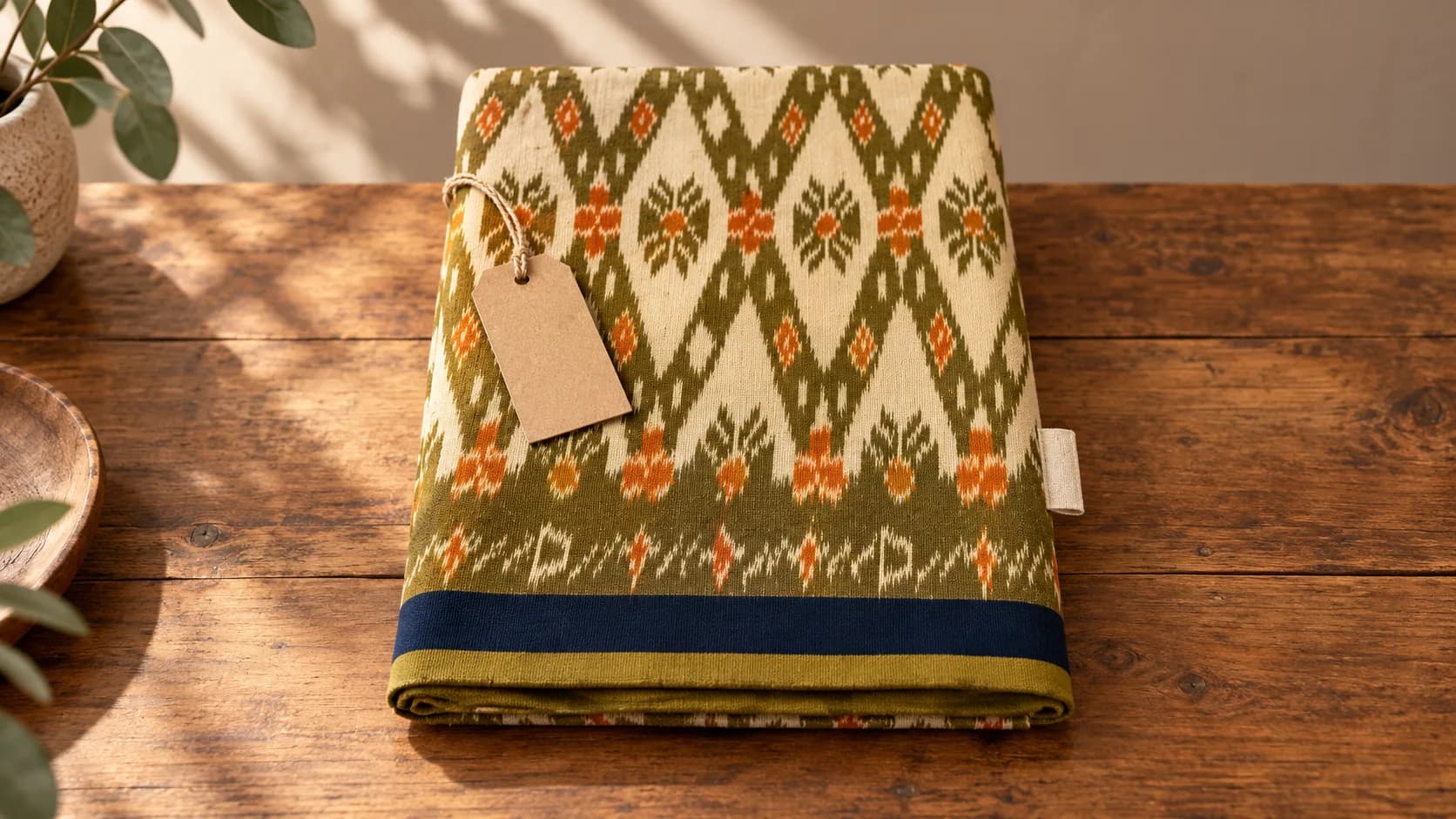
Many woven sarongs follow the same plan, with the kepala picked out in a different check, stripe or ikat pattern from the badan. When the cloth is sewn into a tube, check that the pattern lines up neatly at the seam.
Traditional patterns you will meet
Indonesia's sarong traditions are vast, but most sarongs a wholesale buyer handles fall into a few pattern families:
- Checks (kotak-kotak): the classic everyday sarong pattern, built from crossing bands of colored warp and weft threads. The size and color of the checks set one design apart from another.
- Stripes (garis): simpler warp or weft stripes, often used in the badan with a bolder kepala.
- Ikat: motifs dyed into the yarn before weaving, which gives them the soft, feathered edges described in our guide to export-quality tenun ikat. Our Ikat Troso design is one example.
- Tumpal: rows of triangles, most familiar from the kepala of batik sarongs.
Batik sarongs, where the pattern is drawn or stamped in wax and then dyed, follow the same layout but are a different product from handwoven sarongs.
Reading a design in the catalog
Look at the kepala and badan as a pair, because the contrast between them is what customers notice first when the sarong is folded or worn. If a product photo only shows the sarong folded, ask for a photo of the full cloth laid flat before you order.
Why the anatomy matters when you order
- Custom orders: specify colors for the kepala and the badan separately, and say where the kepala should sit. Our guide to custom sarong manufacturing explains the rest of the process.
- Quality checks: compare the kepala on bulk pieces with your approved sample, and check that borders run straight and the pattern meets cleanly at the seam. Our supplier checklist covers the other checks.
- Product descriptions: naming the kepala and badan colors in your listings helps customers picture the sarong before they see it.
- Display: fold sarongs so the kepala shows at the front of the stack, because it is the most distinctive part of the design.
See the anatomy in our catalog
Browse ready designs from the Juara Harar and Botol Alons collections in our catalog, or tell us what you need for a custom kepala and badan combination. Our team will reply on WhatsApp with suggestions and a quote.
More Stories
Private Label Sarongs: How to Launch Your Own Sarong Line with an Indonesian Manufacturer
Private label sarongs let a boutique, distributor or brand sell handwoven sarongs under its own name. This guide explains how ready designs, custom designs and private label differ, when it makes sense to start, and five steps to launch your own line: defining the designs, briefing labels and packaging, approving a sample, planning quantities and timing, and reordering. At Heritage Loom, custom designs start from 1 kodi (20 pieces) per design, with the option of your own logo, labels and packaging.

How to Wash and Care for a Handwoven Sarong: A Guide Retailers Can Share with Customers
Handwoven cotton sarongs last for years with simple care. This guide explains how to wash a sarong, from the first wash to drying, ironing and storage, and how to treat spots without fading the colors or straining the weave. It also covers how retailers can keep stock in good condition, and ends with a short care card to share with customers.

Wholesale Sarongs for Resellers: How to Order, Minimum Quantities and Tips
A practical guide for resellers buying handwoven sarongs wholesale: the minimum quantity, how ordering works from choosing designs to delivery, and how to plan a first order that sells through. At Heritage Loom, the minimum order is 1 kodi (20 pieces), ready designs can be mixed, and wholesale discounts grow with the number of kodi. The guide also covers the deposit, processing time, returns and tips for reselling handwoven sarongs.