
Export-Quality Tenun Ikat Sarongs from Jepara: A B2B Buyer's Guide to Ordering in Bulk

Ikat sarongs sell on their motifs, and that is exactly where bulk orders tend to go wrong. A motif drifts from piece to piece, colors shift between batches, or the shipment looks nothing like the approved sample.
This guide is for boutiques, distributors and sourcing agents buying tenun ikat sarongs from Jepara in volume. It covers what makes Jepara ikat distinctive, what export quality looks like in practice, and how to order step by step.
What makes Jepara ikat distinctive
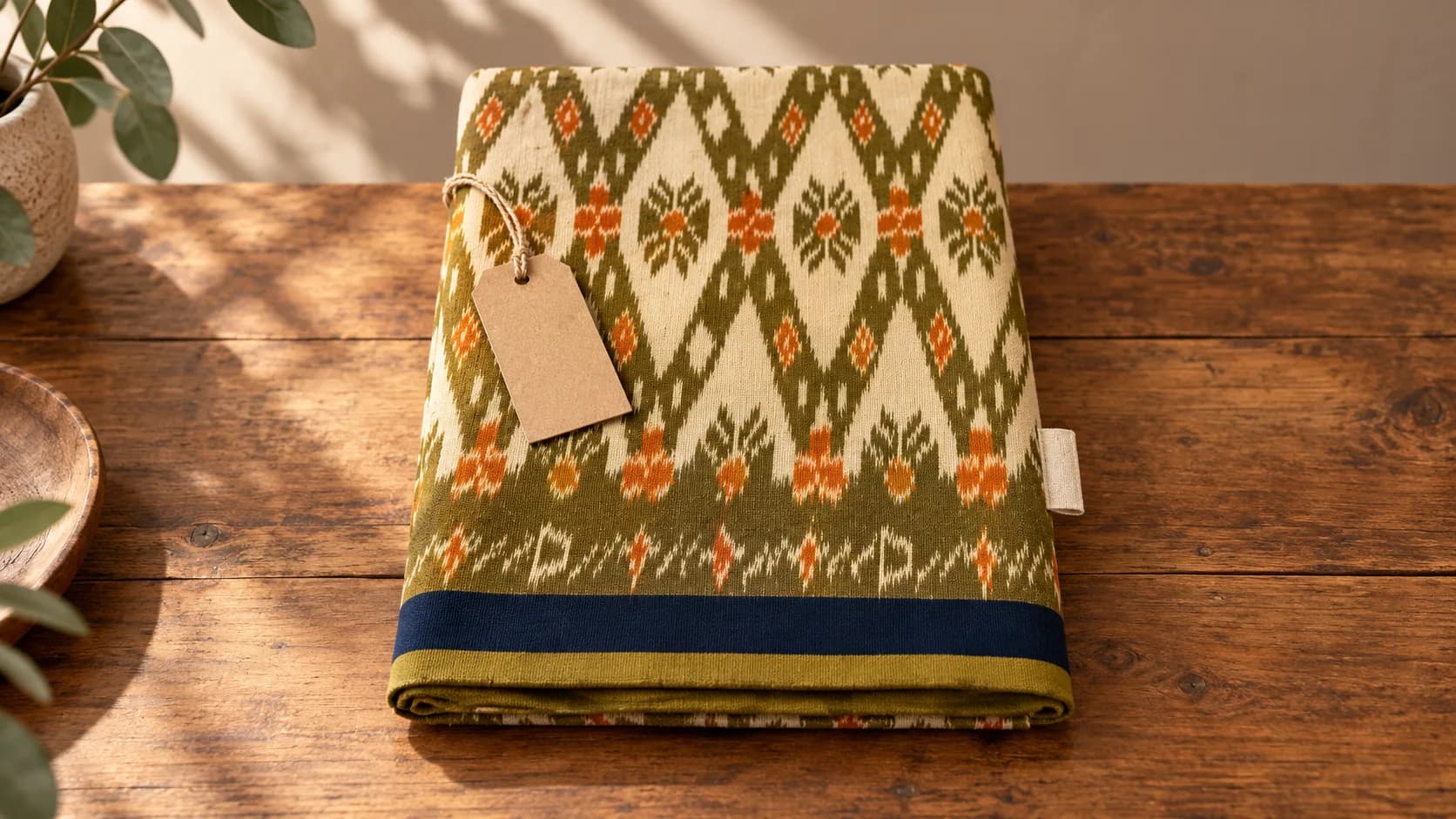
Ikat takes its name from the Indonesian and Malay word mengikat, to tie. Before weaving, sections of yarn are tied according to the motif and then dyed, so the tied parts resist the color. Once woven, the pattern shows soft, slightly feathered edges, the signature of genuine ikat.
In Jepara, the heart of this craft is Troso, a village in Pecangaan Subdistrict where ikat is woven on non-mechanical looms known as ATBM (Indonesia Travel). Each piece takes time: the yarn is patterned, dyed and dried, then prepared for weaving on a manual loom.
Tenun Troso also holds a Geographical Indication certificate. Products carrying the Troso name are expected to meet its standards for motif, tools, dyeing process and quality (Kabar Jepara). For buyers, that makes "Troso" a name worth verifying, not just a label.
For the parts of a sarong and where ikat motifs sit, see our guide to sarong anatomy.
What export quality means for an ikat sarong
Export quality is not a single certificate. It is a set of checks you agree on with your supplier before production, and for ikat sarongs these five matter most.
Motif alignment
Because the pattern is dyed into the yarn before weaving, slightly soft edges are normal. Broken motifs, large gaps or a pattern that drifts visibly across the sarong are not. Agree with your supplier on what counts as acceptable variation.
Color consistency between batches
Hand-dyed yarn can shift in tone from one dye batch to the next. Approve colors on a physical sample, keep that sample as your reference, and ask how later batches are matched to it.
Weave density and handfeel
A dense, even weave keeps the motif crisp and the sarong in shape after washing. Compare bulk goods with your approved sample by feel and by holding both up to the light.
Size and finishing
Confirm the finished width and length, and whether sarongs come sewn into a tube or open. Check edges, seams and loose threads, because customers notice them first.
Colorfastness and packing
Wash one sample to make sure the colors do not bleed. For export, sarongs should be clean, dry and packed to keep out moisture in transit. For how ikat should be washed at home, see our guide on how to wash a sarong.
How to order ikat sarongs in bulk
Ikat takes longer to produce than plain or printed cloth, because the tying and dyeing happen before weaving starts. Plan your order in five steps.
- Shortlist designs and request samples. Pick designs from the catalog and ask for physical samples in the colorways you plan to sell.
- Approve colors and motif. Sign off on one sample per design and keep it as the reference for bulk production.
- Agree on MOQ, price and lead time in writing. Ask whether the minimum applies per design or per colorway, and allow extra time for the tying and dyeing stages. Our guide to bulk sarong orders explains what drives the price per piece.
- Check before shipment. Ask for QC photos or a short report comparing the bulk goods with your approved sample. For what a full pre-shipment check covers, see our guide to sarong quality control for bulk orders.
- Prepare export documents. Make sure the commercial invoice, packing list and certificate of origin are ready, such as Form D for ASEAN destinations. Agree early on who pays freight and import duties. Our guide to shipping sarongs from Indonesia explains each document and who prepares it.
Importing into Malaysia, Brunei or Singapore? Our import guide walks through each document in more detail. Shipping to Thailand? See our Thailand import guide.
Source ikat sarongs with Heritage Loom
Heritage Loom supplies authentic Indonesian handwoven sarongs to boutiques, distributors and sourcing agents, from ready designs to custom and private-label production.
Browse our catalog, including our Ikat Troso design. Then send your designs, quantities and target date through our Contact page, and our team will reply on WhatsApp with samples and a quote.
More Stories
Private Label Sarongs: How to Launch Your Own Sarong Line with an Indonesian Manufacturer
Private label sarongs let a boutique, distributor or brand sell handwoven sarongs under its own name. This guide explains how ready designs, custom designs and private label differ, when it makes sense to start, and five steps to launch your own line: defining the designs, briefing labels and packaging, approving a sample, planning quantities and timing, and reordering. At Heritage Loom, custom designs start from 1 kodi (20 pieces) per design, with the option of your own logo, labels and packaging.

How to Wash and Care for a Handwoven Sarong: A Guide Retailers Can Share with Customers
Handwoven cotton sarongs last for years with simple care. This guide explains how to wash a sarong, from the first wash to drying, ironing and storage, and how to treat spots without fading the colors or straining the weave. It also covers how retailers can keep stock in good condition, and ends with a short care card to share with customers.

Wholesale Sarongs for Resellers: How to Order, Minimum Quantities and Tips
A practical guide for resellers buying handwoven sarongs wholesale: the minimum quantity, how ordering works from choosing designs to delivery, and how to plan a first order that sells through. At Heritage Loom, the minimum order is 1 kodi (20 pieces), ready designs can be mixed, and wholesale discounts grow with the number of kodi. The guide also covers the deposit, processing time, returns and tips for reselling handwoven sarongs.