
How to Import Indonesian Handwoven Sarongs to Thailand: A Guide for Retailers and Distributors

Sourcing handwoven sarongs from Indonesia for a store or distribution business in Thailand is straightforward once you know the steps. A first import order raises the same questions every time: is the product really handwoven, how small can the first order be, and what will Thai Customs ask for when it lands? Selling in Malaysia or Brunei instead? See our guide for Malaysian and Bruneian shops.
This guide is for retailers and distributors in Thailand. It covers what to agree with your supplier, how to ship, how to clear Thai Customs, and what must be on the label before the sarongs go on sale.
1. Confirm what you are buying
Indonesian sarongs sold at wholesale are woven either on a handloom, known locally as ATBM, or on a power loom, and the two are priced very differently. Ask for samples, check the edges and texture, and have the weaving technique written on the quote.
Our guide to handwoven vs. machine-made sarongs walks through six checks, and our supplier checklist covers what to verify before a wholesale order. Heritage Loom's ready collections, for example, are woven in cotton at 120 × 125 cm, with full specifications in the catalog.
2. Agree MOQ, lead time and payment in writing
Indonesian textiles are traded in kodi: 1 kodi is 20 pieces. At Heritage Loom, ready designs start from 1 kodi in total, and you can mix designs as long as the total comes in whole kodi.
Orders under 5 kodi are processed in 7 business days, while larger and custom orders are scheduled per order. Production starts with a 50% deposit, and the balance is due before shipment.
Planning sarongs in your own colors or under your own brand? Our guide to custom sarong manufacturing explains MOQ, steps and lead times for custom orders.
Our guide to bulk sarong orders explains what drives the price per piece and how to estimate landed cost.
3. Choose how to ship
Sarongs are light but bulky, so volume decides the method. Heritage Loom packs 100 pieces per carton, measuring 44 × 36 × 83 cm at about 50 kg.
- Trial orders of a few kodi travel best by air freight or express courier into Bangkok.
- Repeat orders of tens of kodi are worth moving by sea, as LCL or a full container, usually into Laem Chabang or Bangkok Port. A 20 ft container holds about 213 cartons.
Agree the Incoterm upfront, such as EXW, FOB, CIF or DDP, so both sides know who pays freight, insurance and Thai import charges. To compare courier, air and sea freight and plan the lead time, see our guide to shipping sarongs from Indonesia.
4. Register with Thai Customs before the goods arrive
Imports into Thailand are declared through the Customs Department's e-Customs system. Importers register for it with a digital certificate, or appoint a customs broker to file on their behalf (Mondaq).
Make sure the consignee name on the invoice, packing list and air waybill matches the name registered with Thai Customs, otherwise the documents may need amending (FedEx Thailand).
5. Prepare the documents and Form D
For a sarong shipment you will normally need a commercial invoice, a packing list, and a bill of lading or air waybill. To claim the ATIGA preferential duty rate, you also need a certificate of origin, known as Form D.
Indonesia and Thailand both issue and receive the electronic e-Form D through the ASEAN Single Window (Thailand Department of Foreign Trade). Your broker can clear the goods using the Form D reference number instead of a paper original.
Ask your supplier to confirm they can issue Form D for your shipment before you pay the deposit.
6. Budget for import duty and VAT
Agree the HS code with your broker before the goods ship. Classification decides the duty rate and whether any permit applies, and with a valid Form D, Indonesian-origin goods can qualify for the ATIGA preferential rate.
Thailand also charges VAT on imports. The reduced 7% rate has been extended until 30 September 2027 (The Nation), so build it into your landed cost per piece.
7. Label the sarongs in Thai before they go on sale
Under Thailand's consumer protection rules, imported goods sold in Thailand need a label in Thai (OCPB). It shows, among other details, what the product is, the country of manufacture, the importer's name and address, and the size.
The label must be on the product before it goes on sale. If you order custom or private-label sarongs, ask for your Thai label details to be included on the hangtag from the start.
8. Ordering from Heritage Loom
The process is deliberately short:
- Browse the catalog and note the designs and the quantity in kodi you want for each.
- Send your enquiry through the Contact page; it reaches our team on WhatsApp.
- Receive a quotation covering wholesale pricing, lead time and packing details.
- Approve a sample, with sample shipping split 50:50, then confirm the order with the 50% deposit.
- Production runs, the balance is settled, and the goods ship with the documents your broker needs.
Not sure which designs or quantities suit the Thai market? Our export consultation covers product selection, MOQ, pricing and export procedures. Tell us what you are planning, and we will reply with wholesale pricing and availability.
More Stories
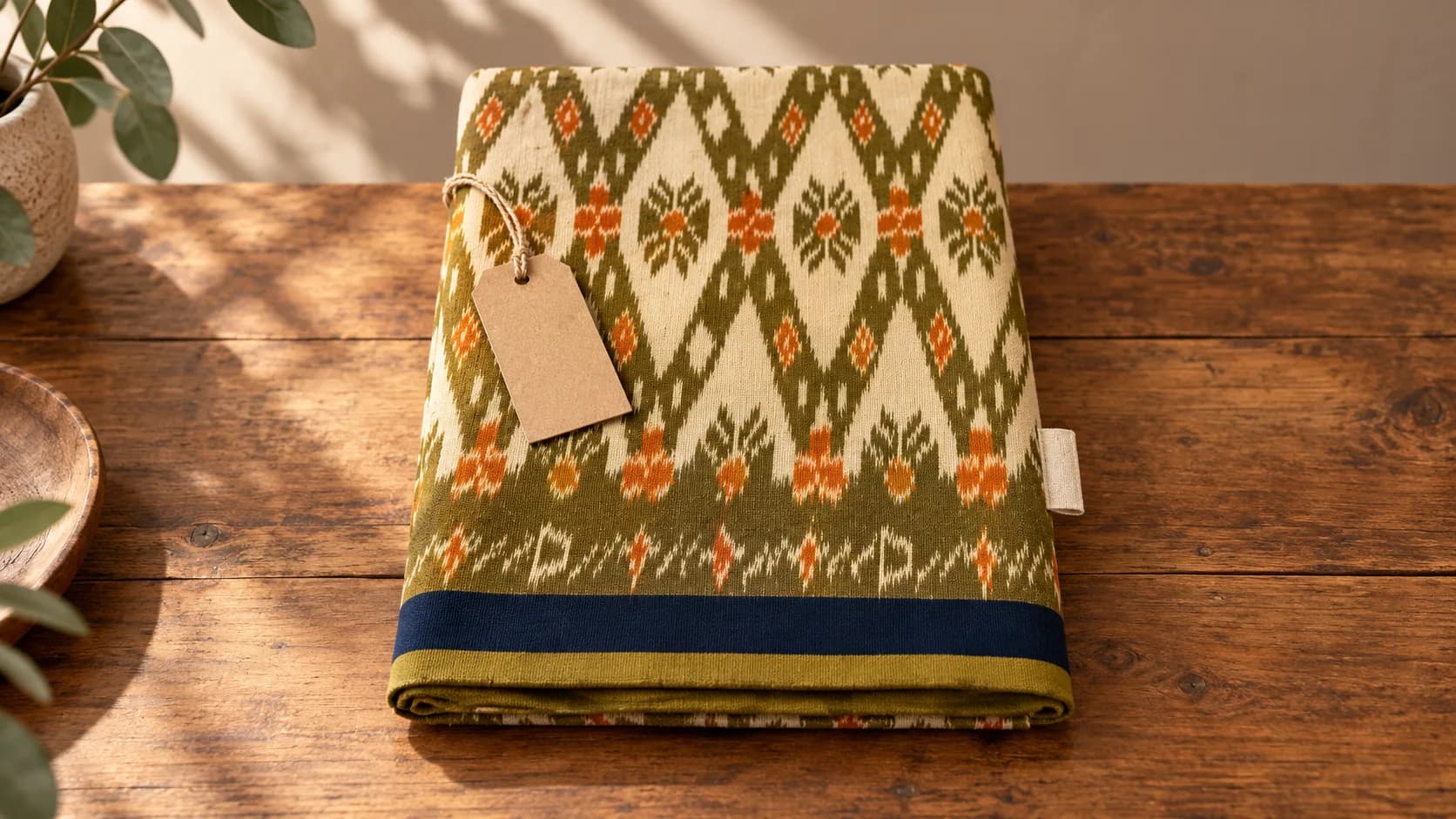
Private Label Sarongs: How to Launch Your Own Sarong Line with an Indonesian Manufacturer
Private label sarongs let a boutique, distributor or brand sell handwoven sarongs under its own name. This guide explains how ready designs, custom designs and private label differ, when it makes sense to start, and five steps to launch your own line: defining the designs, briefing labels and packaging, approving a sample, planning quantities and timing, and reordering. At Heritage Loom, custom designs start from 1 kodi (20 pieces) per design, with the option of your own logo, labels and packaging.

How to Wash and Care for a Handwoven Sarong: A Guide Retailers Can Share with Customers
Handwoven cotton sarongs last for years with simple care. This guide explains how to wash a sarong, from the first wash to drying, ironing and storage, and how to treat spots without fading the colors or straining the weave. It also covers how retailers can keep stock in good condition, and ends with a short care card to share with customers.

Wholesale Sarongs for Resellers: How to Order, Minimum Quantities and Tips
A practical guide for resellers buying handwoven sarongs wholesale: the minimum quantity, how ordering works from choosing designs to delivery, and how to plan a first order that sells through. At Heritage Loom, the minimum order is 1 kodi (20 pieces), ready designs can be mixed, and wholesale discounts grow with the number of kodi. The guide also covers the deposit, processing time, returns and tips for reselling handwoven sarongs.