
Private Label Sarongs: How to Launch Your Own Sarong Line with an Indonesian Manufacturer
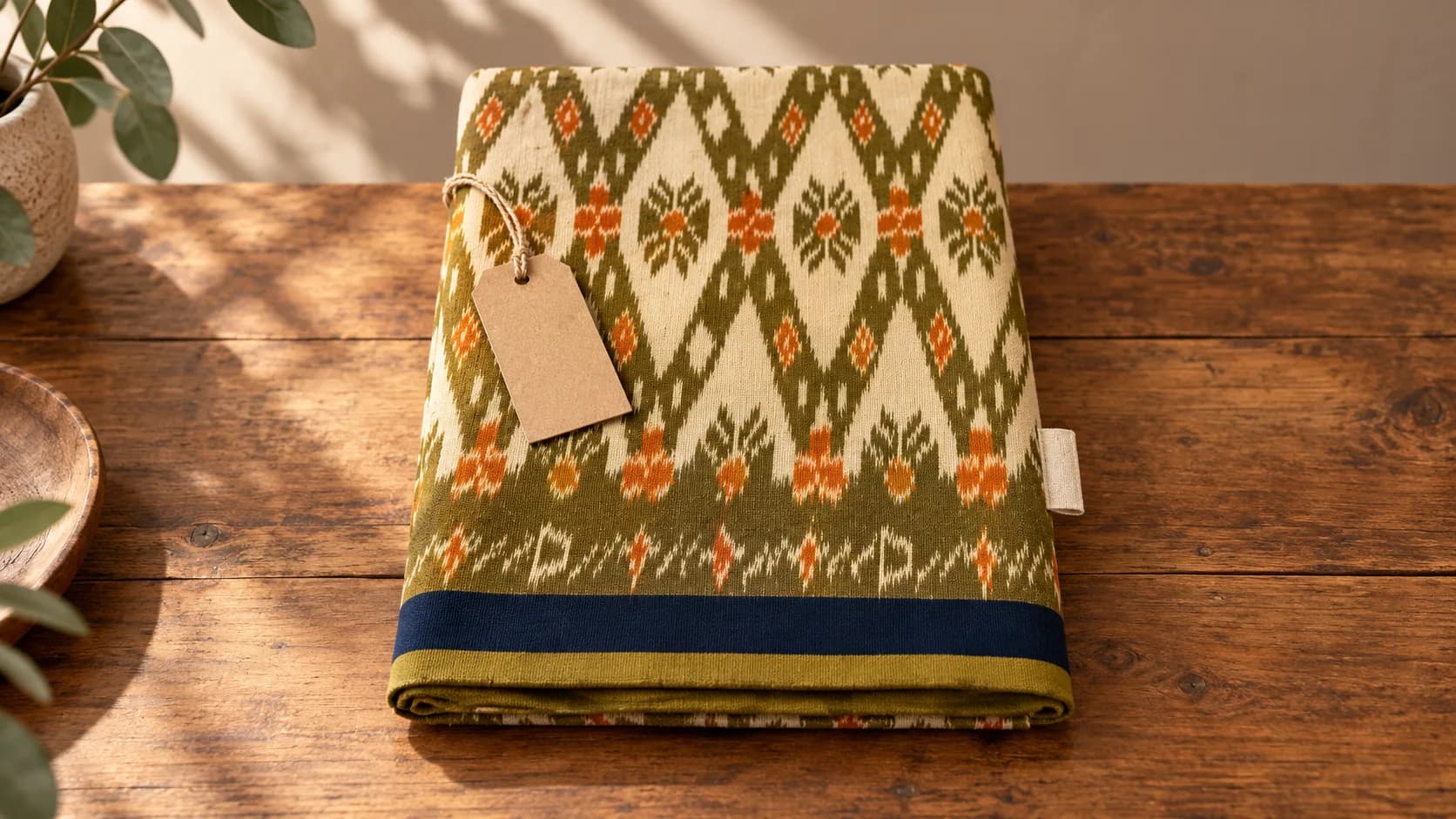
Private label sarongs let a boutique, distributor or brand sell handwoven sarongs under its own name while a manufacturer handles the weaving. Done well, it turns a product you resell into a product only you sell.
This guide explains how private label works for handwoven sarongs, when it makes sense to start, and the five steps from first brief to launch. The terms come from Heritage Loom's custom service; other manufacturers will differ in the details.
Ready designs, custom and private label: what's the difference?
- Ready designs are a manufacturer's own collections. At Heritage Loom, ready designs can be mixed within a kodi, which makes them the easiest way to test what sells, as our guide to wholesale sarongs for resellers explains.
- Custom designs are made to your specification: your pattern, colors, size or material. Our guide to custom sarong manufacturing covers MOQ, process and lead times.
- Private label puts your brand on the finished product: your logo, labels and packaging. At Heritage Loom, this branding is part of the Heritage Custom service.
Many brands combine the last two: their own design, carrying their own label.
When private label makes sense
Private label works best when you already know your customers. Before you start, it helps to have:
- Sales history. You have sold sarongs before and know which colors and motifs move.
- A brand to carry. A name and logo your customers recognize, or will.
- Room in your schedule. Custom orders add a sampling stage, so plan more time than for ready designs.
- Volume per design. At Heritage Loom, each custom design is ordered in whole kodi, with a minimum of 1 kodi (20 pieces) per design, and custom designs are not mixed within a kodi.
If you are not there yet, start with ready designs, learn what sells, and bring that knowledge to your own line later.
Step 1: Define the line
Decide how many designs to launch with. A small first line of two or three designs keeps the minimum quantity manageable and shows you quickly what works.
For each design, settle the pattern, colors, size and material. The Heritage Custom page lists a size of 120 × 125 cm, with flexible options for patterns, colors, sizes and materials. Our guide to sarong anatomy helps you brief where the kepala and badan motifs sit.
Step 2: Brief your branding
Send your manufacturer everything that will carry your brand:
- Logo files, ideally in a vector format, with your brand colors.
- Label text: brand name, material, care instructions and country of origin.
- Hangtags and packaging: what goes on them and how each sarong is presented.
- Market rules: labeling requirements differ by country. In Thailand, for example, imported sarongs need a Thai-language label before they go on sale, as our Thailand import guide explains.
For the care instructions, you can adapt the care card in our guide on how to wash a sarong.
Step 3: Approve a sample
Ask for a sample before production and check it the way your customers will see it: the weave, colors, size, label placement and packaging. At Heritage Loom, samples are available on request, and we cover half of the sample shipping cost. The approved sample becomes the reference for the whole order, as our guide to sarong quality control explains.
Take your time at this step. Custom pieces are made to your order and can't be returned, so the sample is where changes belong.
Step 4: Plan quantities, budget and timing
- Quantity: at least 1 kodi per design. Plan reorders design by design, too.
- Price: the current price per piece is on the Heritage Custom page. Ask for a quote that includes your labels and packaging.
- Payment: a 50% deposit starts production, and the balance is due when the order is ready to ship.
- Lead time: set by your specification and confirmed for your order. Count back from your launch date and leave room for sampling and shipping. Our guide to bulk sarong orders explains what affects lead times, and our shipping guide covers export documents and packing.
Step 5: Launch and reorder
Photograph each design and write product descriptions that explain what makes handwoven cloth different; our guide to handwoven vs. machine-made sarongs can help. Include the care card with every sarong.
Keep the approved samples and design references, so a bestseller can be reordered without starting from scratch.
Start your own sarong line with Heritage Loom
Send your brief through our Contact page: your designs, quantity per design, branding needs, destination and target launch date. Our team will reply on WhatsApp with sample recommendations and a quote. Service details are on our Heritage Custom page.
More Stories

How to Wash and Care for a Handwoven Sarong: A Guide Retailers Can Share with Customers
Handwoven cotton sarongs last for years with simple care. This guide explains how to wash a sarong, from the first wash to drying, ironing and storage, and how to treat spots without fading the colors or straining the weave. It also covers how retailers can keep stock in good condition, and ends with a short care card to share with customers.

Wholesale Sarongs for Resellers: How to Order, Minimum Quantities and Tips
A practical guide for resellers buying handwoven sarongs wholesale: the minimum quantity, how ordering works from choosing designs to delivery, and how to plan a first order that sells through. At Heritage Loom, the minimum order is 1 kodi (20 pieces), ready designs can be mixed, and wholesale discounts grow with the number of kodi. The guide also covers the deposit, processing time, returns and tips for reselling handwoven sarongs.

B2B Sarong Sourcing: How Heritage Loom Ensures Quality Control for Bulk Orders
Handwoven sarongs are never identical, so quality control for a bulk order has to separate natural variation from real defects. This guide explains what is checked at each stage of a bulk order, from the approved sample and dye batches to the final check before packing, which defects buyers look for, and what to agree in writing, including tolerances, defect classes and AQL sampling. It also shows how Heritage Loom handles quality control and how to order in bulk in four steps.