
Premium Handwoven Sarong Suppliers: 5 Things to Check Before a Wholesale Order

In a catalog photo, almost every sarong looks premium. The problems show up after delivery: a loose weave, colors that don't match the sample, or stock that arrives after your busy season has started.
For boutiques, distributors and sourcing agents, the wrong supplier means tied-up capital and disappointed customers. Most of that risk can be avoided by asking the right questions before a wholesale order.
This guide covers how to recognize a premium handwoven sarong, five things to check with your supplier, and how to order from Heritage Loom.
What makes a handwoven sarong premium
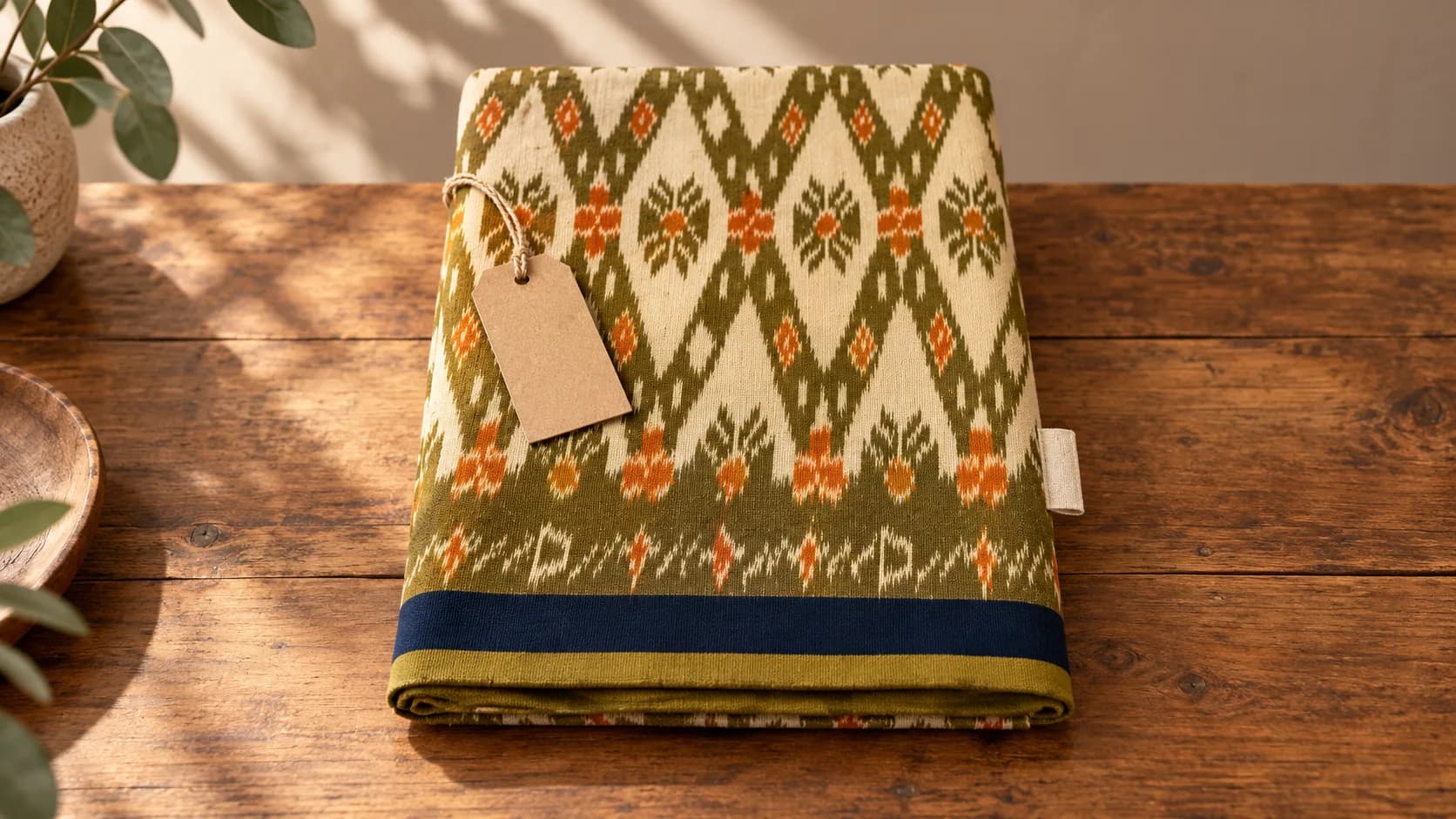
You can judge a premium handwoven sarong by five things: how it is woven, the yarn, the weave density, the color and the finishing. Check all five on a sample before you talk price.
Handloom or machine loom
In Indonesia, handwoven sarongs are made on ATBM looms (alat tenun bukan mesin), non-mechanized looms worked by the weaver's hands and feet. Each piece is woven one at a time, so the cloth has a distinct texture and small, natural variations.
Machine-woven sarongs are more uniform, faster to make and cheaper. Both have a market, so make sure your supplier states clearly which technique they use, because it drives the price. Our guide to handwoven vs. machine-made sarongs shows six ways to tell them apart.
A quick way to tell woven from printed: in woven cloth the pattern is built from the threads, so it shows on both sides. A printed pattern is usually clear on one side only.
Yarn
Ask for the exact yarn composition, not just "premium material".
- Cotton: cool and breathable, good for everyday wear.
- Rayon (viscose): soft, with a fluid drape.
- Silk or silk blends: a natural sheen and a luxurious feel, at a higher price.
- Polyester: affordable and strong, but warmer to wear in tropical climates.
Weave density
Weave density is the number of warp (lengthwise) and weft (crosswise) threads per inch or centimeter. A dense weave lasts longer, holds its shape and keeps the pattern crisp.
A simple test: hold the sample up to the light. Large, uneven gaps between threads point to a loose weave.
Color and finishing
Wash one sample according to the care instructions and check whether the color bleeds or stains other fabric. Then look at the edges, the seam and any loose threads, because a premium sarong is neat down to the small details.
Our guide to sarong anatomy shows which parts to check first. Once the sarongs arrive, our guide on how to wash a sarong explains how to keep the colors from fading.
5 things to check with your supplier before a wholesale order
Once you are happy with the product, check these five things before you agree on a wholesale order. To check the supplier itself, not just the product, use our 7-point checklist for choosing a reliable sarong supplier.
1. Samples
Ask for physical samples of the exact designs and colors you plan to order, not just photos. Check the colors in daylight, feel the texture and keep one piece as your reference.
Also ask whether samples are charged and whether bulk production is guaranteed to match them.
2. MOQ
Find out whether the minimum order quantity applies per design, per color or per order. Ask whether you can mix several designs to reach it.
Custom orders usually carry a higher MOQ than ready designs, so raise it early. At Heritage Loom, ready designs start from 1 kodi in total and can be mixed in whole kodi, while custom designs start from 1 kodi per design.
Our guide to bulk sarong orders explains MOQ, lead times and pricing in more detail. If you plan to resell, our guide to wholesale sarongs for resellers shows how to build an order in kodi and mix designs.
3. Lead time
Handweaving can't be sped up the way machine production can. Ask for the lead time on your quantity, the monthly capacity and the date your goods will be ready to ship.
Match that schedule to your selling season, and put the agreed dates in the quote or contract.
4. Quality control
Ask how the supplier inspects goods, piece by piece or by sampling, and which defects they check for: broken threads, misaligned patterns, stains or wrong sizes.
Ask for QC photos or a report before shipment, and agree in advance what happens if pieces are defective. Our guide to sarong quality control for bulk orders shows what a good QC process checks at each stage.
5. Export readiness
Make sure your supplier can prepare the commercial invoice, packing list and certificate of origin, such as Form D for ASEAN destinations. Ask how sarongs are packed to keep out moisture in transit.
Agree early on who arranges freight and who pays import duties, so there are no surprise costs. If you are importing into Malaysia, Brunei or Singapore, our import guide walks through each document. For Thailand, see our Thailand import guide. For the full list of export documents and how sarongs are packed, read our guide to shipping sarongs from Indonesia. For shops in Malaysia and Brunei, see our first-order guide.
Custom and private label
Besides ready designs from our Juara Harar and Botol Alons collections, Heritage Loom offers custom and private-label production.
- Custom: colors or motifs developed for you, for example a signature look for your store or a corporate gift.
- Private label: sarongs produced under your own brand. Our guide to private label sarongs walks through the steps.
To get an accurate quote faster, share color or motif references, estimated quantity, target price and the date you need the goods. Read our guide to custom sarong manufacturing for MOQ, steps and lead times.
How to order from Heritage Loom
A wholesale order with Heritage Loom takes four steps.
- Send an inquiry through our Contact page. Tell us the designs you like or what you need custom, your estimated quantity, destination city or country, and target date. The form connects you directly with our team on WhatsApp.
- Samples and quote. We send a price quote and arrange samples to suit your needs.
- Production. Once designs, quantity and schedule are agreed, weaving begins.
- Delivery. Goods are inspected, packed and shipped to your address.
Start with the catalog
Want to compare for yourself? Browse the Juara Harar and Botol Alons collections in our catalog. Then send us your requirements through our Contact page.
Tell us the designs, quantity and target date. Our team will reply on WhatsApp with sample recommendations and a quote.
More Stories
Private Label Sarongs: How to Launch Your Own Sarong Line with an Indonesian Manufacturer
Private label sarongs let a boutique, distributor or brand sell handwoven sarongs under its own name. This guide explains how ready designs, custom designs and private label differ, when it makes sense to start, and five steps to launch your own line: defining the designs, briefing labels and packaging, approving a sample, planning quantities and timing, and reordering. At Heritage Loom, custom designs start from 1 kodi (20 pieces) per design, with the option of your own logo, labels and packaging.

How to Wash and Care for a Handwoven Sarong: A Guide Retailers Can Share with Customers
Handwoven cotton sarongs last for years with simple care. This guide explains how to wash a sarong, from the first wash to drying, ironing and storage, and how to treat spots without fading the colors or straining the weave. It also covers how retailers can keep stock in good condition, and ends with a short care card to share with customers.

Wholesale Sarongs for Resellers: How to Order, Minimum Quantities and Tips
A practical guide for resellers buying handwoven sarongs wholesale: the minimum quantity, how ordering works from choosing designs to delivery, and how to plan a first order that sells through. At Heritage Loom, the minimum order is 1 kodi (20 pieces), ready designs can be mixed, and wholesale discounts grow with the number of kodi. The guide also covers the deposit, processing time, returns and tips for reselling handwoven sarongs.