
Handwoven Sarongs as Corporate Gifts: A Year-Round Guide for Companies and Gift Suppliers

Many corporate gifts share the same fate. The branded tumbler ends up at the back of a cupboard and the power bank in a drawer. A gift meant to say "we value working with you" is forgotten within weeks.
Perhaps you are responsible for thanking clients, welcoming partners or recognizing employees. Or you run a corporate gift business that needs products your clients haven't seen a hundred times before. Either way, a handwoven Indonesian sarong deserves a closer look. It is practical, it carries a genuine story, and it can be personalized without turning it into merchandise.
This guide covers when a handwoven sarong makes a good corporate gift and when it doesn't. It also covers which occasions it suits throughout the year, how to personalize it, and how to plan an order that arrives on time.
Why a handwoven sarong works as a corporate gift
It gets used, not stored. In Indonesia, Malaysia and Brunei, the sarong is part of everyday life. People wear it at home, for prayer, at family gatherings and on slow weekends. A good handwoven sarong is something the recipient reaches for again and again, and every wear is a quiet reminder of who gave it.
It carries a story worth telling. Every handwoven sarong passes through skilled hands: selecting materials, dyeing, weaving, finishing and a final quality check. That journey gives you something to say when you hand it over, and a story is what turns a gift into a conversation.
It feels premium without being flashy. Handwoven cloth has a texture and depth of color that people notice the moment they hold it. For senior clients and long-standing partners, understated quality often lands better than an obviously expensive item. If you are new to handwoven sarongs, our guide to choosing a premium sarong explains what to look for.
One size fits most. A sarong is wrapped and folded to fit. Unlike shirts or jackets, there is no need to collect sizes from every recipient.
It travels well. A folded sarong is light, compact and unbreakable. It ships easily to partners overseas and packs flat in a visiting guest's luggage, without the worry that comes with ceramics or glassware.
Who it suits best, and when to think twice
A sarong is a personal, wearable gift, so it works best when the recipient already has some connection to it. It is a natural fit for three groups:
- Clients, partners and employees in Indonesia, Malaysia, Brunei and other markets where the sarong is part of daily life.
- Recipients who wear a sarong for prayer and will genuinely use a well-made one.
- Anyone who appreciates craft and heritage textiles, wherever they are based.
It needs a little more thought when your recipients have no connection to the sarong and may not know how to wear it. In that case, include a short card that explains the fabric and shows how to tie it. Or reserve the sarong for the relationships where its story matters most. Matching the gift to the person is what makes it feel considered rather than generic.
Occasions that suit a handwoven sarong, all year round
- Client and partner appreciation: after a major project, a contract renewal or a partnership anniversary.
- International guests and delegations: a gift with a clear sense of place for visiting partners, investors or officials, especially when you are hosting them in Indonesia.
- Employee milestones: long-service awards, promotions, retirements and farewells.
- Company events: speaker and VIP gifts at conferences, annual meetings, company anniversaries and product launches.
- Festive seasons: celebrations such as Hari Raya remain the traditional peak for sarong gifting. They are also when weaving workshops are busiest, so these orders need the most lead time.
How to personalize a sarong gift without overdoing the logo
The most memorable corporate gifts carry the giver's identity quietly. Here are a few options to discuss with your supplier:
- Start with the design. Choose from ready collections, such as our Juara Harar and Botol Alons collections, or develop a custom colorway that echoes your brand palette.
- Add a label, not a billboard. A discreet label or a branded card keeps the sarong wearable. A large logo woven across the fabric makes it feel like merchandise, and it is less likely to be worn. Ask us about labels for custom and private-label orders.
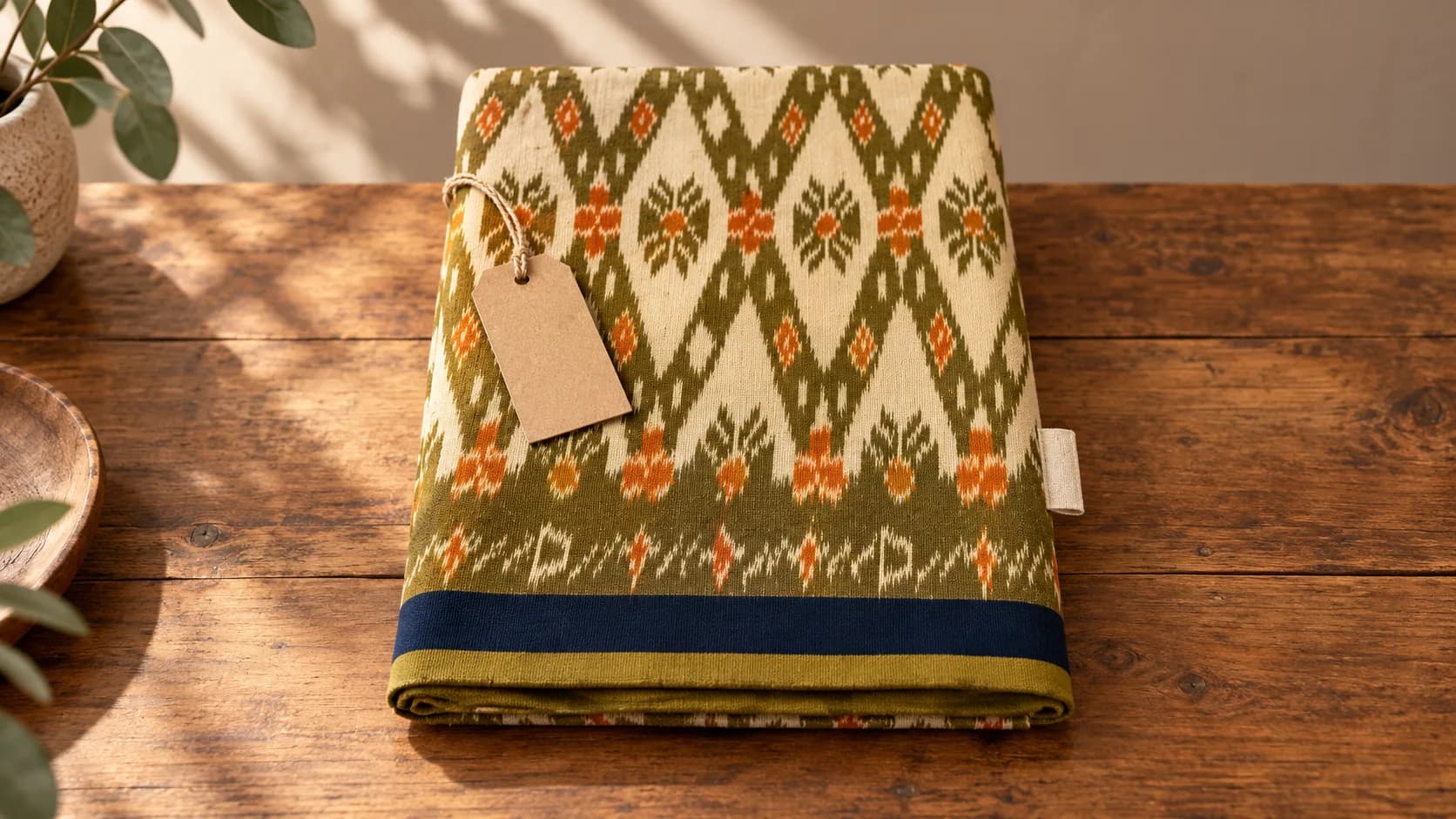
- Make the unboxing count. Presentation shapes the first impression. Our signature gift box presents the sarong ready to give. For larger orders, ask us about packaging options.
- Include a story card. Add a few lines on how the sarong was made, the name of the design, how to wear it and how to care for it. It costs very little, and it is often the part recipients remember.
- Keep colors versatile for large lists. Classic colors suit a broad group. Save bolder palettes for recipients whose taste you know.
A short care card in the gift box helps recipients look after the cloth; our guide on how to wash a sarong includes one you can adapt.
Planning your order: a step-by-step checklist
Handwoven production can't be rushed the way machine production can. The earlier you start, the more options you keep.
- Define recipients and quantity, plus a few spares for last-minute additions.
- Set a budget per recipient that covers packaging and delivery, not just the sarong. Planning souvenirs for an event in Indonesia? Our guide to corporate souvenirs in Indonesia shows how to set the budget, quantity and timing.
- Request samples. Feel the fabric, check the colors in daylight and see the gift box before you commit.
- Confirm MOQ and lead time early. Share your delivery date in your first inquiry so your supplier can tell you what is realistic, especially if you want custom colors or labels. Our guide to bulk sarong orders explains how MOQ and lead time work in kodi.
- Approve the final design and packaging from a pre-production sample or photos before full production begins.
- Plan delivery. Decide whether you need one address or many, within Indonesia or overseas. If you are shipping to Malaysia, Brunei or Singapore, our guide to importing handwoven sarongs explains the documents you will need.
Preparing souvenirs for a company event? Our guide to corporate souvenirs in Indonesia covers budget, quantity and timing.
Frequently asked questions
Is a sarong an appropriate gift for non-Muslim recipients?
In many cases, yes. People of many faiths and backgrounds across South and Southeast Asia wear sarongs, both every day and for ceremonies. What matters most is whether your recipient will wear or appreciate it. A short card explaining the fabric goes a long way.
Can we add our company name or logo?
Yes, as part of a custom or private-label order. We recommend a discreet label, a branded card or branded packaging rather than a large logo on the fabric. That way the sarong stays something people want to wear.
How far in advance should we order?
As early as you can, and earlier still for festive seasons. Each handwoven piece is made on the loom one at a time, and custom colors or labels add time. Tell us your delivery date when you inquire and we will confirm what is achievable.
Why does a handwoven sarong cost more than a machine-made one?
Because each piece takes a skilled weaver's time. You are paying for craftsmanship, and you get a fabric with a character that mass-produced cloth rarely matches. That is exactly what makes it memorable as a gift.
Plan your corporate gifts with Heritage Loom
At Heritage Loom, we create authentic Indonesian handwoven sarongs, woven by skilled local artisans. We work with companies, boutiques, distributors and sourcing agents, from ready designs to custom and private-label production.
Browse our catalog to see the Juara Harar and Botol Alons collections. Or send us your recipient count, budget per piece and delivery date through our Contact page. The form connects you directly with our team on WhatsApp, and we will suggest designs, personalization options and packaging to fit your plan.
More Stories
Private Label Sarongs: How to Launch Your Own Sarong Line with an Indonesian Manufacturer
Private label sarongs let a boutique, distributor or brand sell handwoven sarongs under its own name. This guide explains how ready designs, custom designs and private label differ, when it makes sense to start, and five steps to launch your own line: defining the designs, briefing labels and packaging, approving a sample, planning quantities and timing, and reordering. At Heritage Loom, custom designs start from 1 kodi (20 pieces) per design, with the option of your own logo, labels and packaging.

How to Wash and Care for a Handwoven Sarong: A Guide Retailers Can Share with Customers
Handwoven cotton sarongs last for years with simple care. This guide explains how to wash a sarong, from the first wash to drying, ironing and storage, and how to treat spots without fading the colors or straining the weave. It also covers how retailers can keep stock in good condition, and ends with a short care card to share with customers.

Wholesale Sarongs for Resellers: How to Order, Minimum Quantities and Tips
A practical guide for resellers buying handwoven sarongs wholesale: the minimum quantity, how ordering works from choosing designs to delivery, and how to plan a first order that sells through. At Heritage Loom, the minimum order is 1 kodi (20 pieces), ready designs can be mixed, and wholesale discounts grow with the number of kodi. The guide also covers the deposit, processing time, returns and tips for reselling handwoven sarongs.