
A Sourcing Agent's Guide to Requesting Sarong Samples and Quotes from Indonesia
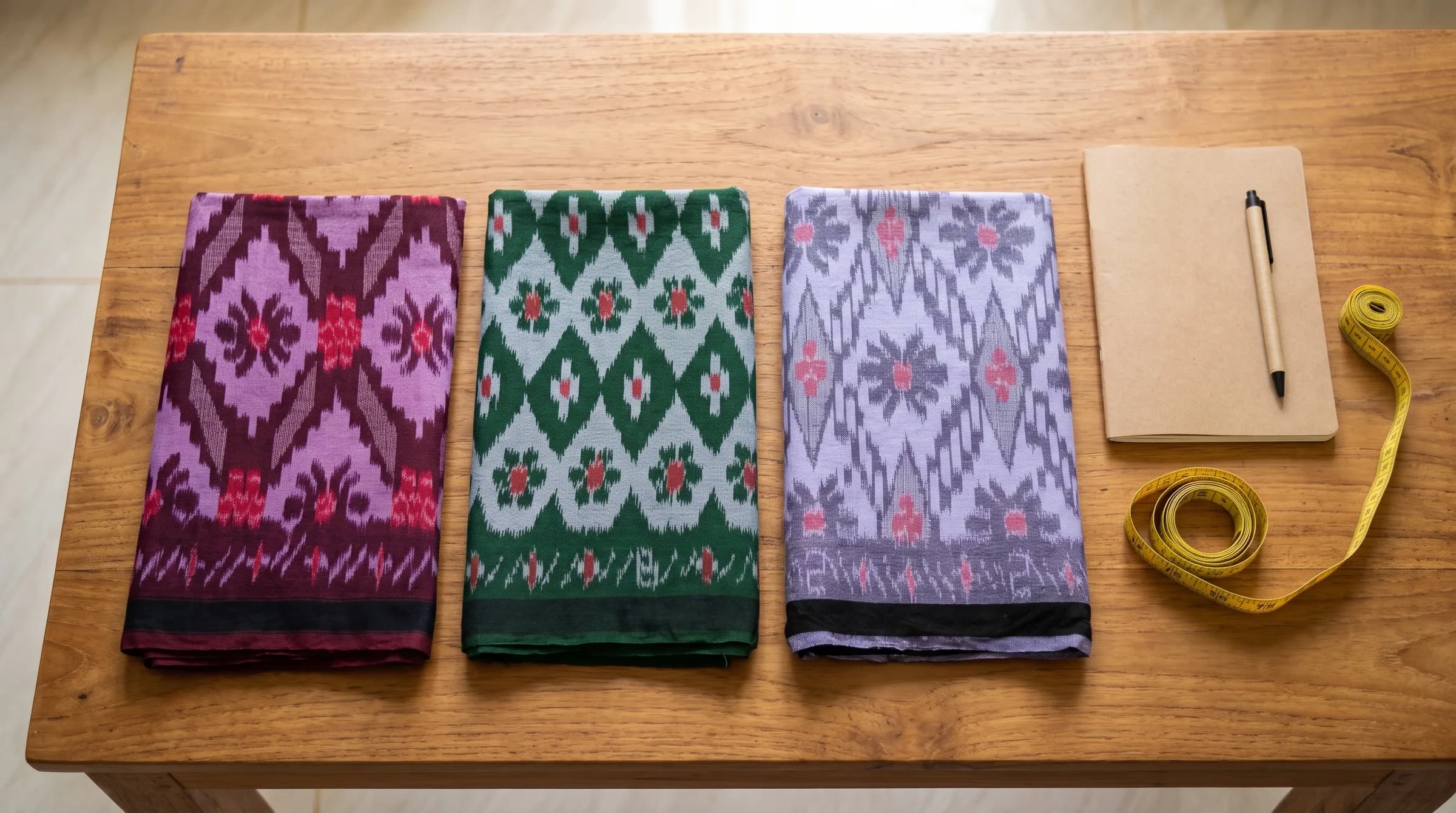
For a sourcing agent, the sample and the quote are where a sarong order is won or lost. The sample sets the standard your client will judge the bulk order against, and the quote sets the price they sign off. A vague request gets a vague answer, and both take longer.
This guide explains how to request sarong samples and quotes from an Indonesian supplier: what to prepare, what to include, what a complete quote covers and how to compare quotes. The examples use Heritage Loom's current terms.
Prepare your client's brief first
Before you contact suppliers, agree these points with your client. They shape both the sample and the price.
- Product: ready designs from a catalog, or a custom design. Custom orders follow different rules for minimums and timing, as our guide to custom sarong manufacturing explains.
- Technique and material: handwoven or machine-made, and which fiber. The two are priced very differently, so state it in the brief; our guide to handwoven vs. machine-made sarongs shows how to tell them apart.
- Quantity per design and for the whole order, so the supplier can quote the right price tier.
- Destination and delivery date: the country, the delivery address and the date your client needs the goods.
- Branding and labeling: whether the sarongs will carry your client's labels, and what the destination market requires on a label. Our guide to private label sarongs covers branding, and our Thailand import guide shows one market's labeling rules.
- Target price, if your client has one.
What to include in a sample request
A clear sample request saves a round of messages. Include:
- The designs you want to see. Use the supplier's design and collection names, for example Mahogany Noir from the Juara Harar collection, or attach references for a custom design.
- How many samples you need. One per design for your client, and ideally one more to keep, so both sides can compare the bulk order against the same piece.
- What the sample is for. Say what your client will check: weave, color, size, finishing or labels. Our guide to sarong quality control explains how an approved sample is used.
- The delivery address and deadline. Give the full address, a contact person and the date the samples must arrive.
- Your planned order. Share the expected quantity and timing, so the supplier can prepare a quote alongside the samples.
- Questions about cost. Ask what the samples cost and who pays for shipping. At Heritage Loom, customers may request samples, and the shipping cost for samples is split equally: 50% is paid by the customer and 50% by Heritage Loom.
What a complete quote should cover
Ask for these points in writing, on the quote or proforma invoice:
- Price per piece and currency, and the discount at your quantity. At Heritage Loom, prices on the website are per piece and subject to change, and the discount grows with the number of kodi in one order, from 7% on 1–5 kodi up to 25% on 41–50 kodi, as shown on our Offers page.
- Minimum order and mixing rules. At Heritage Loom, pre-orders start from 1 kodi (20 pieces) and designs can be mixed within a kodi, while custom designs are ordered at 1 kodi per design.
- Production time, confirmed for your order, plus shipping time. Our guide to bulk sarong orders explains what drives both lead time and price.
- Payment terms. At Heritage Loom, pre-orders need a 50% deposit, which is non-refundable if the order is cancelled, and the balance is due when the order is ready to ship, as set out in our Terms of Use.
- Shipping and the Incoterm: who pays for what, and up to which point. Agree the term in writing; our guide to shipping sarongs from Indonesia explains EXW, FOB, CIF, DAP and DDP.
- Packing: pieces and weight per carton. Heritage Loom's standard packing for pre-orders is 100 pieces per carton, at 50 kg per carton.
- Quality and returns: the approved sample, the agreed tolerance and how problems are handled. At Heritage Loom, custom products can't be returned, and damaged or incorrect items are reported within 5 business days of delivery, as set out in our Shipping & Returns policy.
- How long the quote is valid.
How to compare quotes
- Compare like with like: the same technique, material, size, quantity and Incoterm. A lower price for machine-made cloth, or a quote that leaves out shipping, isn't really cheaper.
- Work out the landed cost per piece: the price plus shipping, import duties and packaging, divided by the number of pieces. Our guide to wholesale sarongs for resellers shows how.
- Check the supplier, not just the price. Our 7-point checklist for choosing a sarong supplier in Indonesia covers what to verify.
Reviewing samples with your client
- Check each sample in daylight against the brief: weave, color, size and finishing.
- Agree what counts as a defect. Small variations between handwoven pieces are normal, so decide with your client which differences are acceptable before the bulk order.
- Record the approval in writing, with photos, and keep the reference piece for the inspection of the bulk order.
Request samples and a quote from Heritage Loom
Browse our catalog and note the design names, then send your brief through our Contact page: designs, quantity per design, destination, target date and any branding needs. Your message opens in WhatsApp so you can send it to our team, who can also guide you on product selection, MOQ, pricing and export procedures. Planning a 2027 range? Start early, so there is time for samples, approval and production.
More Stories
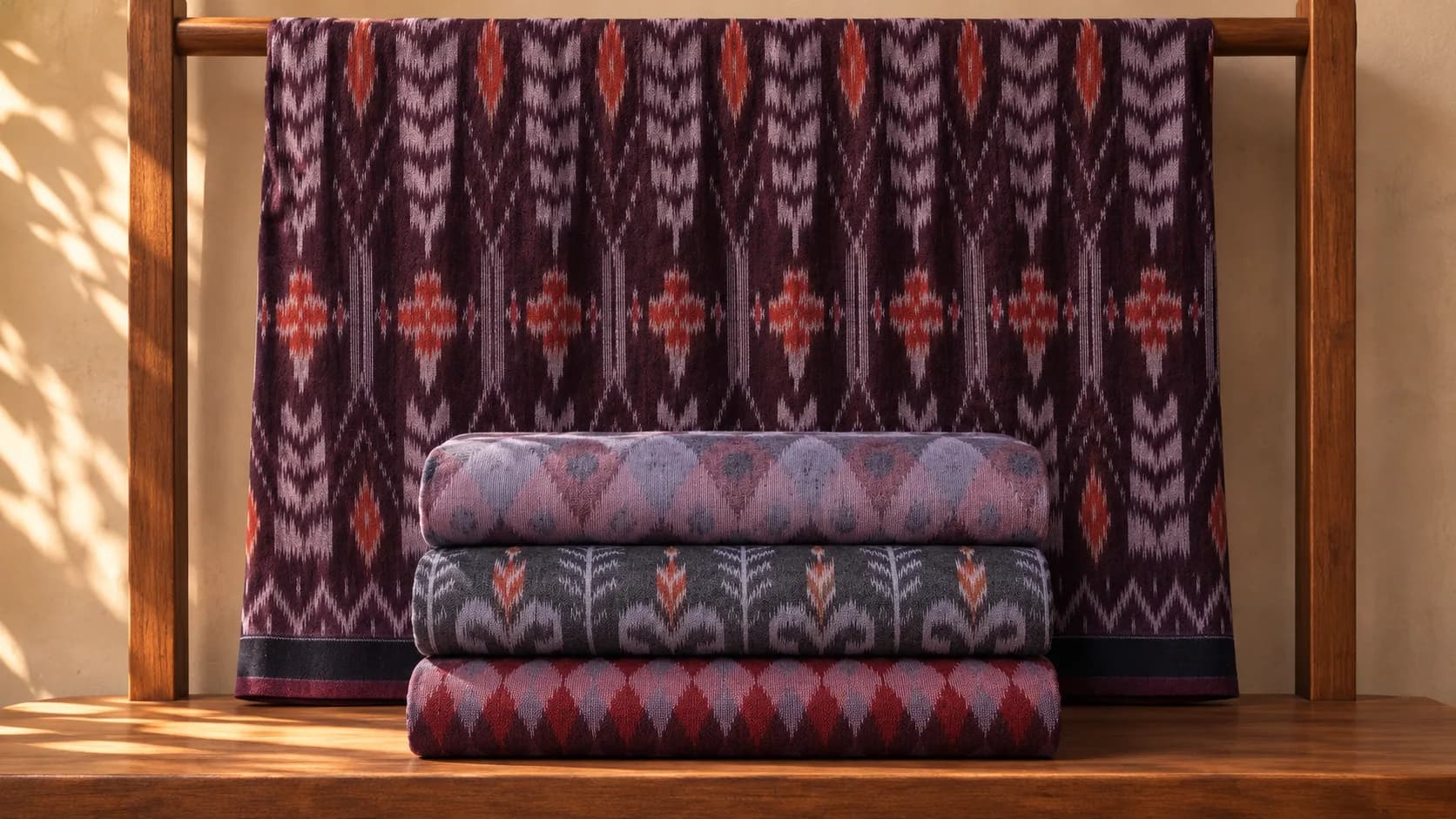
Selling Handwoven Sarongs in Your Boutique: Display, Styling, and Storytelling Tips
Practical tips for boutiques selling handwoven sarongs: how to display them so customers see the weave and the kepala, how to show them worn and styled, and how to tell the handwoven story on product cards, in store and online. The guide also covers tracking which designs sell and reordering in time, with examples from Heritage Loom's Juara Harar and Botol Alons collections.

B2B Handwoven Textile Supplier: Getting to Know Jepara Ikat Sarongs for Wholesale and Export
A guide for business buyers looking for a B2B handwoven textile supplier: what Jepara ikat sarongs from Troso village are, why they work for wholesale and export, and the order options from Ready Stock to Pre-Order and custom. At Heritage Loom, pre-orders start from 1 kodi (20 pieces) with designs mixed freely, a 50% deposit and wholesale discounts by the kodi. The guide also lists what to confirm before ordering and how export shipping works.
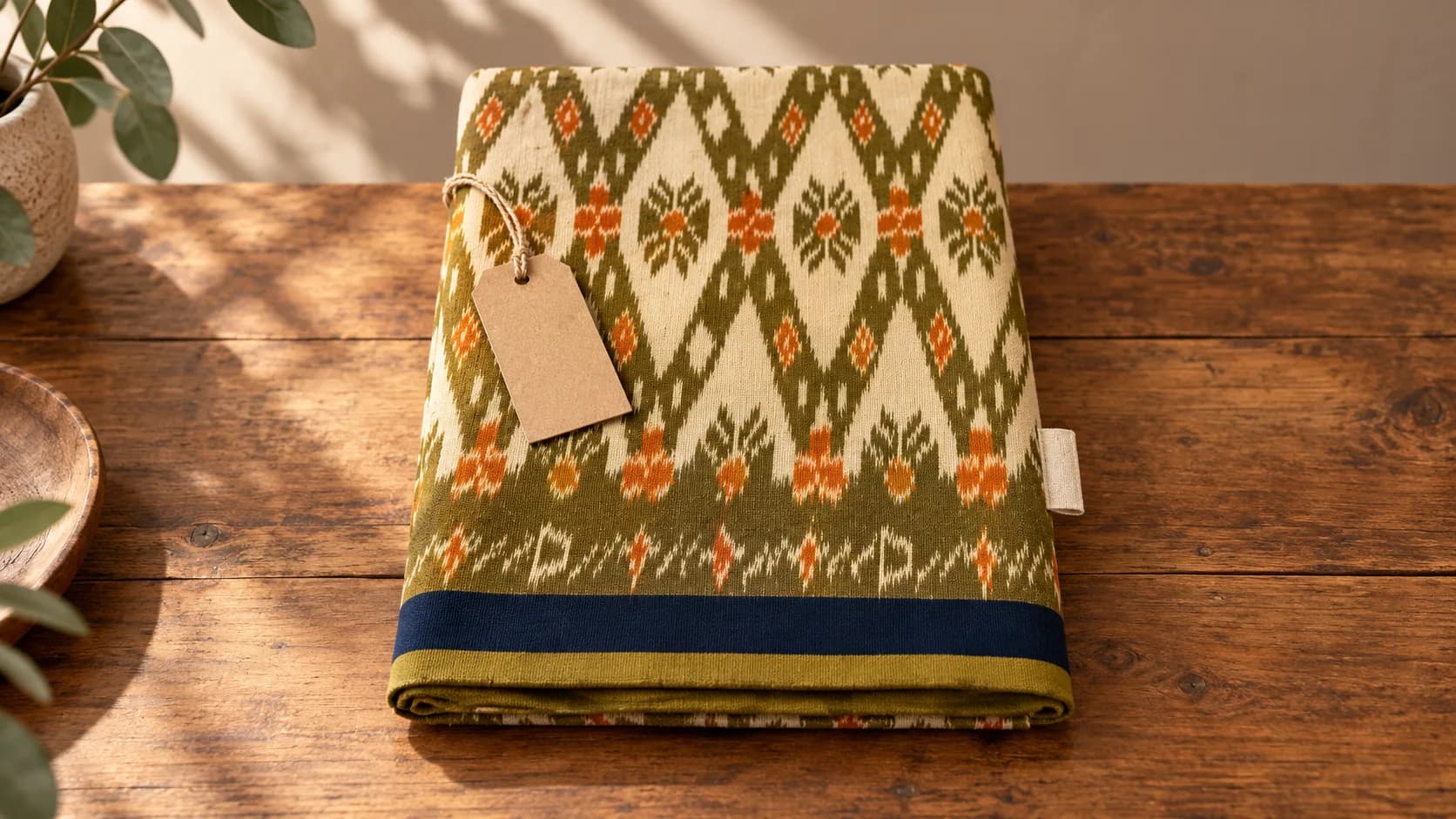
Private Label Sarongs: How to Launch Your Own Sarong Line with an Indonesian Manufacturer
Private label sarongs let a boutique, distributor or brand sell handwoven sarongs under its own name. This guide explains how ready designs, custom designs and private label differ, when it makes sense to start, and five steps to launch your own line: defining the designs, briefing labels and packaging, approving a sample, planning quantities and timing, and reordering. At Heritage Loom, custom designs start from 1 kodi (20 pieces) per design, with the option of your own logo, labels and packaging.