
Trusted Artisan Weavers for Export: Sarong Quality Standards Buyers Should Check

For an export buyer, sarong quality is decided long before the goods arrive. Once a container has sailed, pieces that miss the standard are hard to replace, and customers at the destination judge your brand by the first piece they hold. Finding trusted artisan weavers for export means finding a partner who can keep the same quality from the sample to the bulk order and every reorder.
This guide covers the signs of export-ready weavers, the sarong quality standards buyers should check, simple tests you can run on a sample, and how to put it all in writing before production. The examples use Heritage Loom's current terms.
Signs of trusted artisan weavers for export
- Consistent results. The pieces you receive match the approved sample, and a reorder matches the first order. Ask how colors and motifs are matched from one batch to the next.
- Honest about handwoven character. Sarongs woven on ATBM looms (alat tenun bukan mesin, or non-machine looms) always vary slightly from piece to piece. Trusted weavers explain this at the start, not after the goods arrive. Our guide to handwoven vs. machine-made sarongs shows how to tell the two apart.
- Open about the process. They can show the looms, the yarn and the workshop through photos, video or a visit. Our 7-point checklist for choosing a sarong supplier explains how to confirm who actually weaves your order.
- Terms in writing. Minimum order, deposit, production time and returns are agreed in writing before production starts.
- Export know-how. They know how to pack sarongs for a long journey and which documents travel with the shipment.
Sarong quality standards buyers should check
Put these standards in one spec sheet and agree them before production. What makes a handwoven sarong premium, such as the yarn and the weave density, is covered in our guide to premium handwoven sarong suppliers. The table below sums up what to check and how.
| Standard | What to check | How to check |
|---|---|---|
| Material | The yarn matches the spec, for example cotton | Ask for a written spec and match it to the label |
| Size | Length and width match the agreed size, within tolerance | Measure several pieces on a flat surface |
| Shrinkage | Change in size after washing | Wash-test a sample |
| Weave | Even, with no loose areas, holes or broken threads | Hold the cloth up to the light and compare it with the sample |
| Colorfastness | Color does not bleed in the wash or rub off | Wash and rub tests with a white cloth |
| Consistency | Color, motif and kepala placement match the reference sample | Compare in daylight against the sample you kept |
| Finishing | Neat edges, strong seams, no loose threads | Check every edge and seam |
| Labels and packing | Labels meet the rules of your market; packing is clean, dry and protected from moisture | Check your market's labeling rules and ask how each carton is packed |
Our guide to sarong anatomy explains where the kepala and badan sit. For ikat sarongs, motif alignment and color consistency between batches are covered in more detail in our buyer's guide to export-quality Jepara ikat. Defect types and how to classify them are in our guide to sarong quality control for bulk orders.
Simple tests to run on a sample
Test the sample yourself before the bulk order. The results become your reference when you check the bulk order later.
- Measure before washing. Measure the sample's length and width on a flat surface and note the results.
- Wash test. Wash the sample with a piece of white cloth, following the care method recommended for that sarong. If the white cloth is stained, the color bleeds. Our guide to washing and caring for a handwoven sarong explains the recommended method.
- Measure again once dry. Compare with the first measurements. The difference divided by the original size, times 100, is the shrinkage percentage.
- Rub test. Rub a dry white cloth over the sarong about ten times, then repeat with a slightly damp white cloth. If color transfers, discuss the result with the weavers before you order.
- Photograph and record. Keep the results with the reference sample.
For large orders, or when your retail customers ask for test reports, a textile laboratory can test colorfastness to ISO 105 standards, such as ISO 105-C06 for laundering and ISO 105-X12 for rubbing.
Labels for your destination market
Labeling rules differ by country. In the United States, for example, textile products must be labeled with their fiber content, country of origin and the identity of the manufacturer or the business marketing them (FTC). In the European Union, a fiber composition label is also required (EUR-Lex). Check the rules for your market and write the label requirements into your spec sheet. If the sarongs will carry your own brand, see our guide to private label sarongs.
Put the standards in writing before production
- One spec sheet. Combine the material, size and tolerance, sample test results, photos of the reference sample, label requirements and packing method. Send it with your sample request; our guide to requesting sarong samples and quotes lists what else to include.
- Both sides keep a reference sample, so the bulk order and any reorder are compared against the same piece.
- Check before shipment. Ask for photos or an inspection report before the goods are packed, or hire an independent inspection company for large orders.
- Packing and documents. Agree the packing method and shipping documents early; our guide to shipping sarongs from Indonesia explains both.
Quality standards at Heritage Loom
Heritage Loom works with skilled local artisans, and every collection goes through a quality control process. Catalog designs such as Royal Amethyst and Ikat Troso are handwoven on ATBM looms from cotton and measure 120 × 125 cm.
- Samples on request. The shipping cost for samples is split equally: 50% is paid by the customer and 50% by Heritage Loom.
- Pre-orders from 1 kodi (20 pieces), with designs mixed freely and production time confirmed per order, as set out in our Terms of Use.
- Standard packing is 100 pieces per carton, at 50 kg per carton.
- Damaged or incorrect items must be reported within 5 business days of receipt, with photos of the product and the package, under our Shipping & Returns policy.
See the weaving process in our Gallery, choose your designs in the catalog, then send your spec sheet through our Contact page. Your message opens in WhatsApp so you can send it to our team, who can also guide you on product selection, MOQ, pricing and export procedures.
More Stories
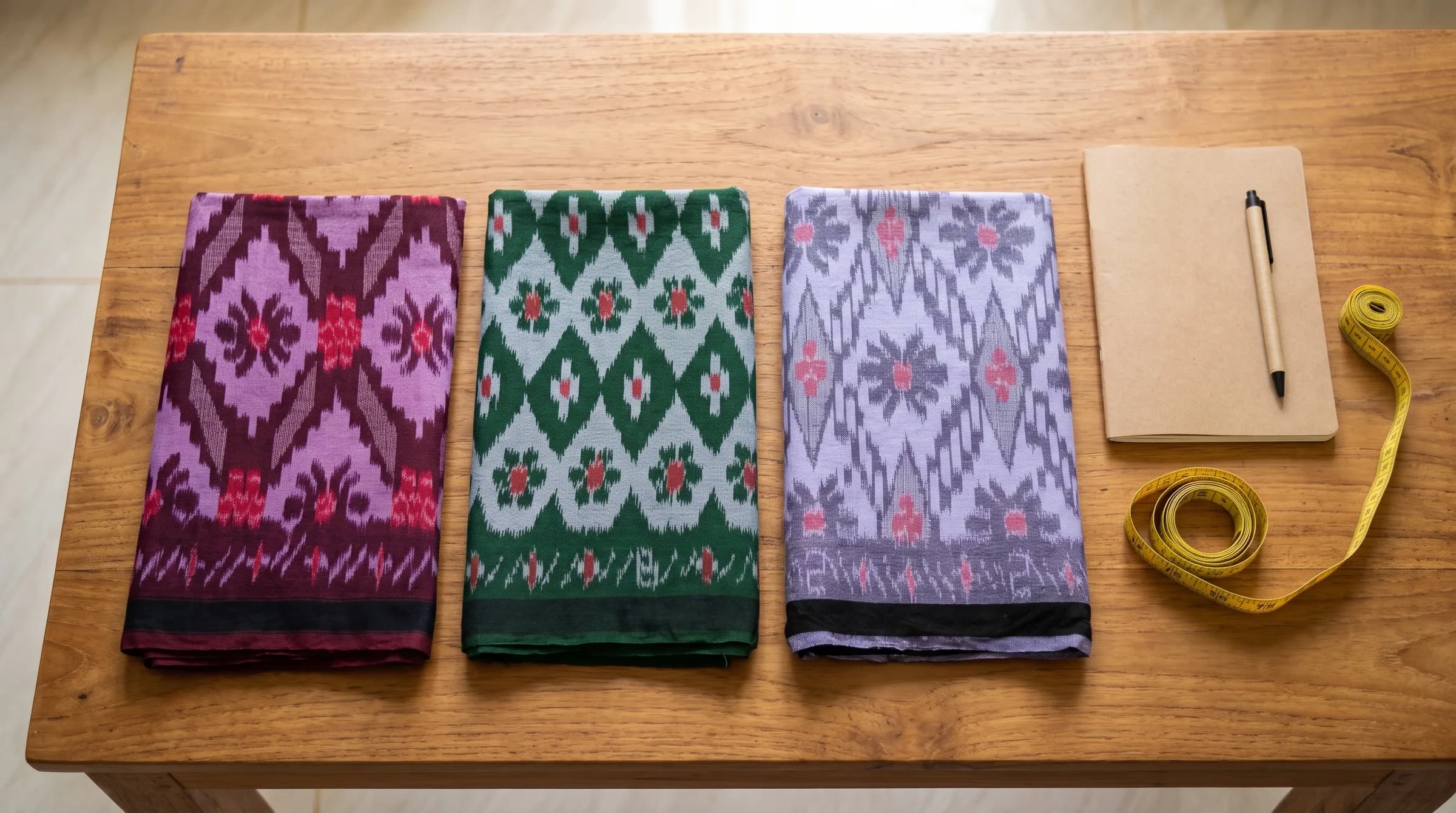
A Sourcing Agent's Guide to Requesting Sarong Samples and Quotes from Indonesia
A practical guide for sourcing agents who request sarong samples and quotes from Indonesian suppliers: how to prepare your client's brief, what to include in a sample request, what a complete quote should cover, and how to compare quotes and review samples. It uses Heritage Loom's current terms as examples, including sample shipping split 50/50, pre-orders from 1 kodi and a 50% deposit.
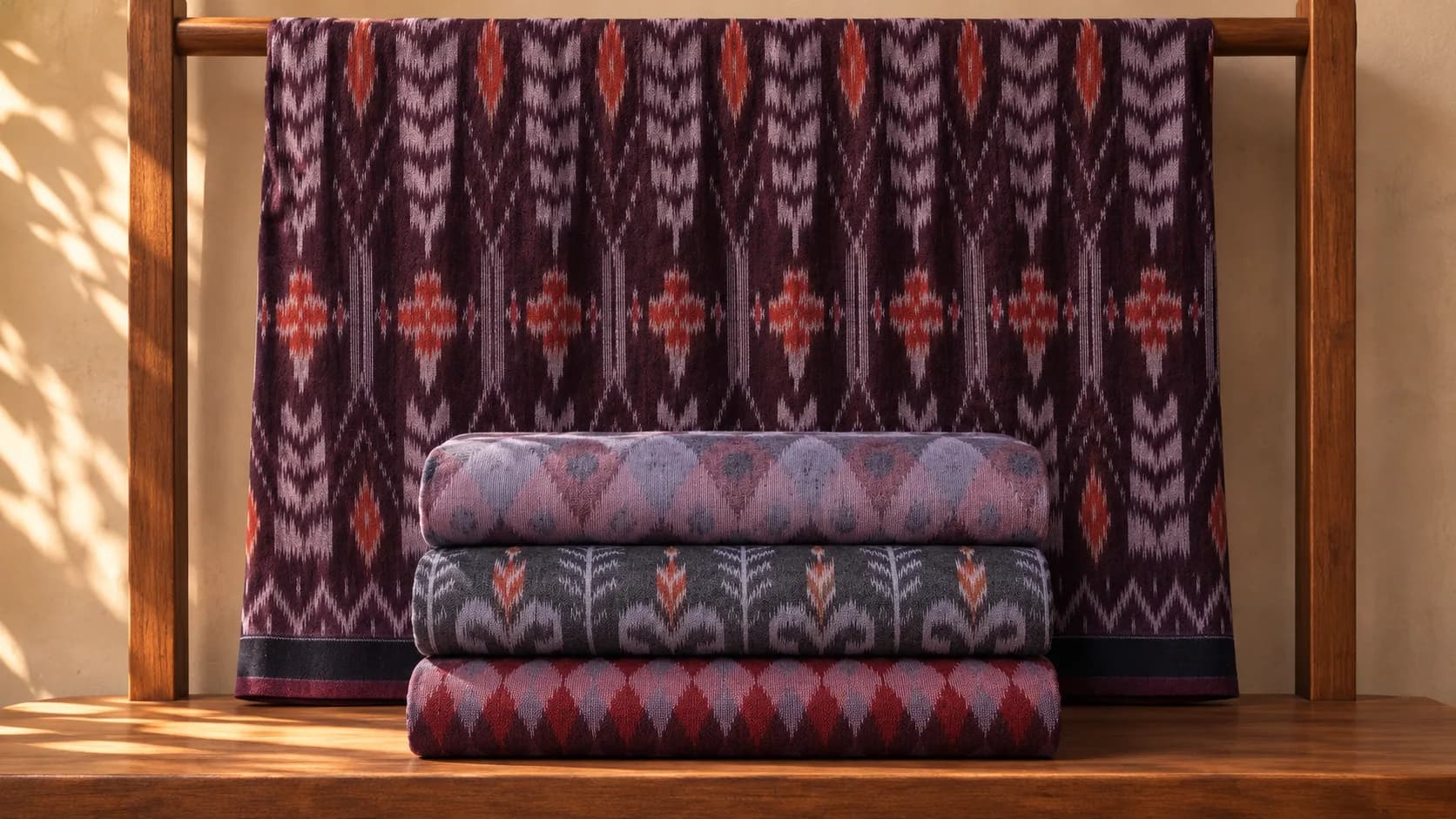
Selling Handwoven Sarongs in Your Boutique: Display, Styling, and Storytelling Tips
Practical tips for boutiques selling handwoven sarongs: how to display them so customers see the weave and the kepala, how to show them worn and styled, and how to tell the handwoven story on product cards, in store and online. The guide also covers tracking which designs sell and reordering in time, with examples from Heritage Loom's Juara Harar and Botol Alons collections.

B2B Handwoven Textile Supplier: Getting to Know Jepara Ikat Sarongs for Wholesale and Export
A guide for business buyers looking for a B2B handwoven textile supplier: what Jepara ikat sarongs from Troso village are, why they work for wholesale and export, and the order options from Ready Stock to Pre-Order and custom. At Heritage Loom, pre-orders start from 1 kodi (20 pieces) with designs mixed freely, a 50% deposit and wholesale discounts by the kodi. The guide also lists what to confirm before ordering and how export shipping works.